9 minutes
If someone in your home has been told to track blood pressure — a parent, your spouse, you — the first thing to know is this: not all home BP monitors are equally trustworthy. The second thing: the difference between a good one and a bad one isn't ₹2,000. It's decisions.
The comparison reviewed the monitors Indian homes actually buy — from the Omron workhorses doctors keep recommending to the budget units that populate online marketplaces — on the things that decide whether your readings mean anything: validation, cuff quality, consistency across readings, and features that help rather than confuse. Here's what held up.
Quick Verdict: Top Picks
| Rank | Monitor | Best For | ~Price |
|---|---|---|---|
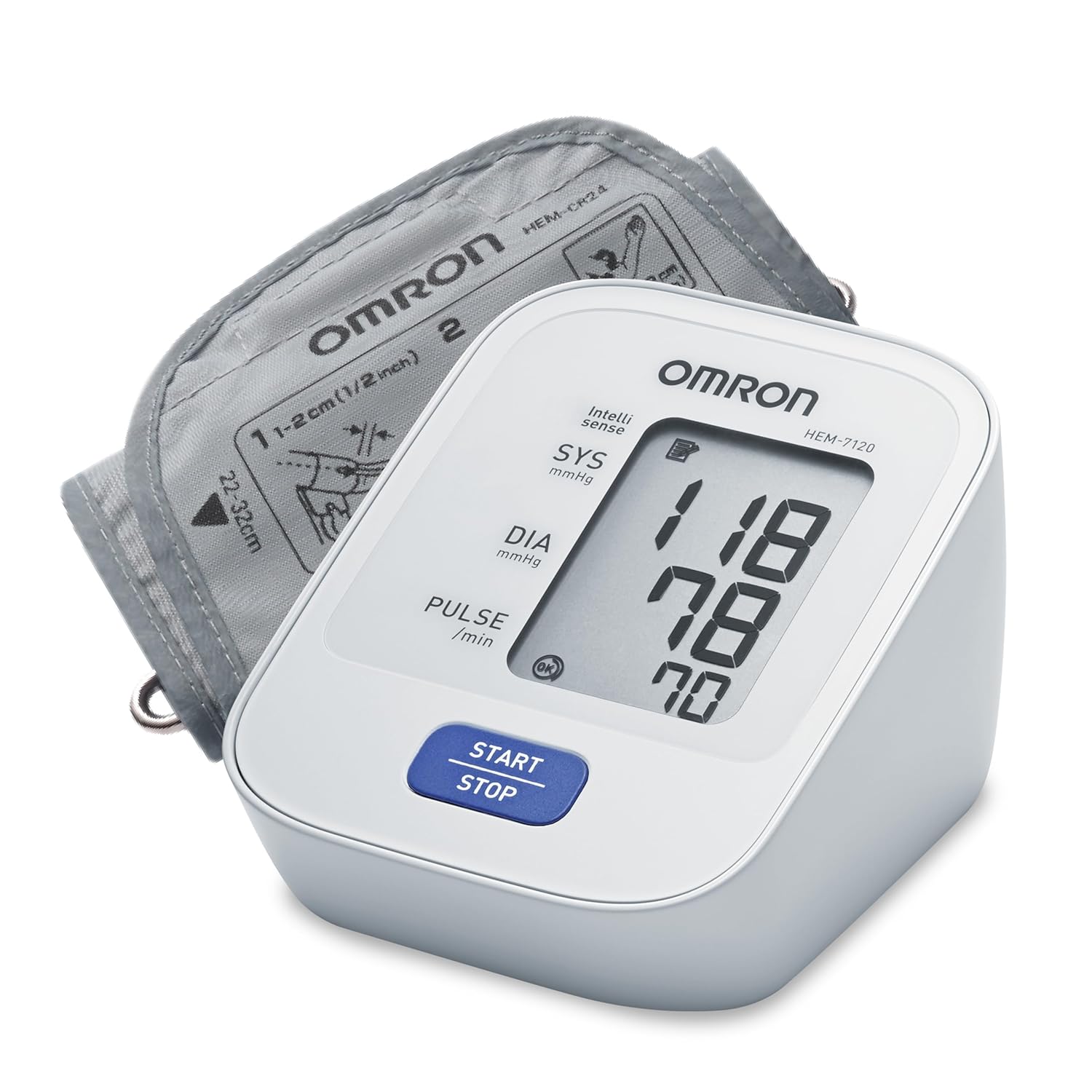
| 🥇 #1 | Omron HEM 7120 | The doctor-approved default | ~₹2,200 |
| 🥈 #2 | Omron HEM 7156T | Bluetooth tracking + AFib indicator | ~₹3,200 |
| 🥉 #3 | Dr Morepen BP09 | Tight budgets | ~₹1,700 |
🥇 Omron HEM 7120 — The Default for a Reason
| Specification | Details |
|---|---|
| Cuff type | Upper arm, standard cuff |
| Measurement | Oscillometric, automatic inflation |
| Memory | Last reading (single) |
| Detection | Hypertension indicator, body movement detection |
| Warranty | 5 years (Omron India) |
The Good:
- This is the monitor clinics use. Omron's oscillometric measurement is the reference standard for home devices in India — when your doctor says "get an Omron," this is usually the one they mean
- Boringly consistent. Take three readings in a row and they'll agree within a few points. That consistency is the entire value of home monitoring — erratic devices create anxiety, not data
- Movement detection saves readings — it flags when you shifted or talked mid-measurement instead of silently giving you garbage numbers
- Five-year warranty at this price is quietly excellent
The Not-So-Good:
- No memory bank or app sync — you'll write readings in a diary like it's 1998 (which, honestly, works fine)
- Standard cuff may not fit very large arms — check circumference before buying
The take: if you just need trustworthy numbers without fuss, stop reading and buy this one. It's the default because it earned it.
🥈 Omron HEM 7156T — For People Who Track Everything
| Specification | Details |
|---|---|
| Cuff type | Upper arm, Intellisense inflation |
| Connectivity | Bluetooth → Omron Connect app |
| Memory | Multiple user profiles, reading history |
| Detection | Irregular heartbeat + AFib indicator |
| Extras | Cuff wrap guide |
The Good:
- Readings land in your phone automatically — no transcription errors, no "I think it was 138?" at the doctor's office. The app graphs trends over weeks, which is what cardiologists actually want to see
- AFib detection is genuinely important — atrial fibrillation often shows up as "irregular readings" long before symptoms. A monitor that flags irregular rhythm prompts earlier doctor conversations
- The cuff-wrap guide prevents the #1 error — a loosely wrapped cuff reads high. This feature catches it before it happens
The Not-So-Good:
- The app wants accounts and permissions, like all apps
- You're paying ~₹1,000 over the 7120 mostly for connectivity
The take: worth the upgrade if you're monitoring long-term, managing multiple readings weekly, or sharing the device between two people (profiles matter).
🥉 Dr Morepen BP09 — The Straight Budget Pick
| Specification | Details |
|---|---|
| Cuff type | Upper arm, universal cuff |
| Memory | 2×90 readings |
| Detection | Irregular heartbeat indicator |
| Display | Large LCD |
| Warranty | 2 years |
The Good:
- Two-user memory with 90 readings each — a feature the pricier 7120 doesn't even offer
- Large display that older users can actually read without glasses
- Costs less than a family dinner out
The Not-So-Good:
- Consistency is decent but not Omron-grade — take two readings and average them, especially if a number surprises you
- Long-term durability reports are mixed; treat the warranty as real but hope not to use it
The take: for occasional monitoring on a strict budget, it does the job. For daily medical tracking, spend up to the Omron.
⚠️ Also Tested: BPL & AccuSure
The BPL 120/80 B19 (~₹1,900) is a respectable middle child — BPL's medical-device heritage shows in the build, and it sits between the Dr Morepen and Omron on consistency. The AccuSure AS9 (~₹1,500) is the entry floor; fine as a backup unit, but no one should make medication decisions based on any sub-₹1,500 monitor's readings alone.
For the complete home health kit — where BP monitoring fits alongside oximeters and thermometers — the home health monitoring guide covers the full picture.
How to Actually Get Accurate Readings at Home
A perfect monitor produces garbage readings if used wrong. This checklist matters more than which device you buy:
- Sit still for 5 minutes first. Walking in from the kitchen and strapping on the cuff inflates systolic by 10–15 points. Sit. Breathe. Then measure
- Cuff at heart level, feet flat, back supported. Arm dangling or crossed legs skew results meaningfully
- Same time daily — morning before medication is the gold standard. Trends beat single readings every time
- Two readings, one minute apart, and note both. If they differ wildly, take a third
- Empty bladder first. Yes, really. It can add 10+ points
- No chai, cigarettes, or arguments for 30 minutes before. (The last one is hardest during family visits.)
And the rule that outranks everything: home readings inform conversations with your doctor — they don't replace them. If readings are consistently high, that's a clinic visit, not a blog comment section.
Why Wrist Monitors Were Not Recommended
You'll see wrist BP monitors for less money, and they're tempting for people who find arm cuffs uncomfortable. They are left off this list deliberately: wrist monitors are extremely sensitive to wrist position — they read inaccurately unless held exactly at heart level, which nobody does consistently at home. Upper-arm cuffs forgive human error. At home, forgiveness is the feature.
For Parents Especially
If you're buying this for elderly parents living alone, pair it with the rest of the kit from the senior care tech guide — and consider the Bluetooth model (7156T) specifically so you can see the readings trend remotely without weekly phone interrogations. "Beta, did you check BP?" becomes "I saw Tuesday's reading, looks better."
The Bottom Line
Omron HEM 7120 (~₹2,200) for most homes — the trustworthy default with a five-year warranty. HEM 7156T (~₹3,200) if tracking matters or two people share the device. Dr Morepen BP09 (~₹1,700) for tight budgets and occasional checks.
Whichever you buy: buy a validated upper-arm monitor, learn the five-minute routine, and log the trend. Blood pressure management is a marathon of small correct readings — and now the machine in your drawing room will actually be telling you the truth.